One type of weather I have come to appreciate in the UK, which I never enjoyed in America, is snow. While I wouldn’t claim to have a specific favorite type of weather, adapting to the frequent rain that the UK experiences is crucial. If you don’t enjoy damp conditions, relocating to the UK might present more challenges than expected. Nevertheless, I have developed a fondness for snow since moving here; it’s captivating how it gently falls and blankets the picturesque mountains, creating a cozy atmosphere that’s hard to describe. You truly need to experience it for yourself. Although this might seem like rambling, snow has genuinely become one of my favourite weather types since my arrival in the UK.
There are numerous activities I wish to engage in daily, but the most significant is the desire for more hours to dedicate to learning. My move to the UK was primarily motivated by this quest for knowledge, as I aim to explore various cultures, systems, and broaden my understanding. I long for additional time to indulge in reading books, articles, and informative Wikipedia entries. Unfortunately, with only 24 hours in a day, I find myself wishing for more time to satisfy my intellectual curiosity.
One word that truly defines my journey of moving to the UK is persistence. Struggling to find a job here is an uphill battle—trust me, it’s tougher than you can imagine! Before you step foot in the UK, brace yourself to face numerous shattered hopes and dreams. While this may be true for any relocation, if you think it will be easier here, let me assure you: it’s not. Yet, remember, there’s always a glimmer of hope waiting at the end of the tunnel! No matter where you are—here or back home—never give up. Persistence is the secret weapon for thriving in the UK, and it will lead you to opportunities you never dreamed possible.
Hello, one of the biggest challenges of deciding to move to the UK is understanding the visa rules and determining which visa is the best fit for your situation. This topic is quite complex, so I’m going to break it down into several posts, dedicating more time to each visa type.
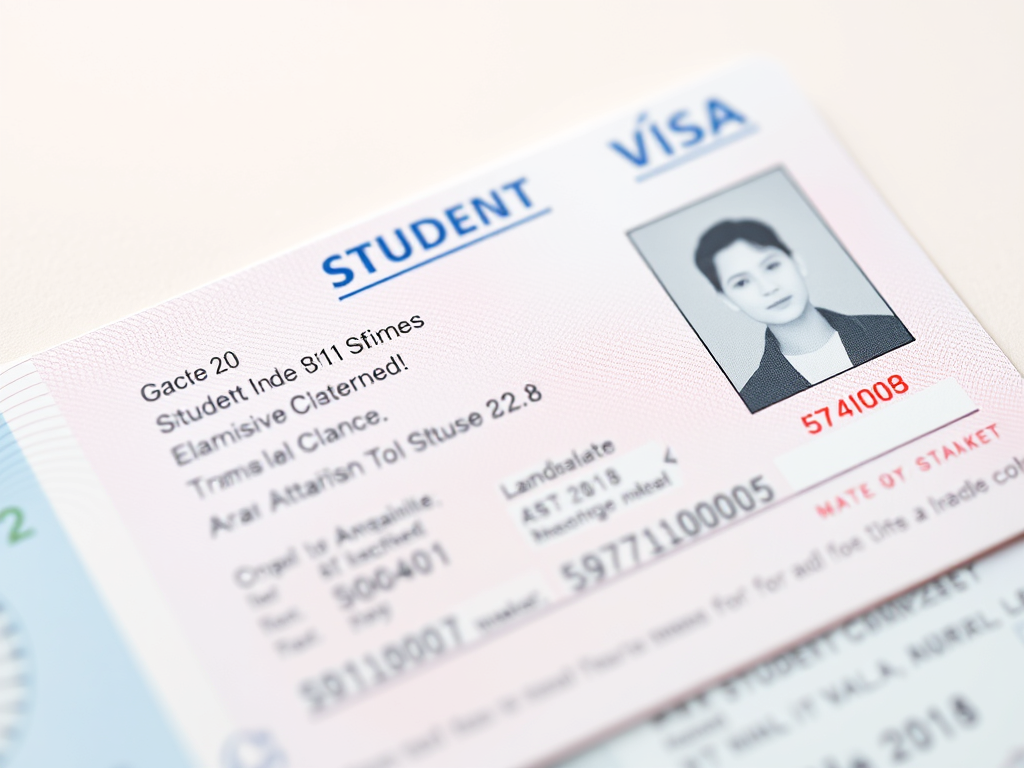
Let’s start with, arguably, the simplest visa available: the Student Visa. If you’re considering studying in the UK, the Student Visa is essential for international students. In this post, we’ll explore the application process, eligibility requirements, and tips for securing your Student Visa efficiently. Understanding these critical aspects will pave the way for a successful educational journey in the UK.
To obtain a student visa, you must be accepted by a recognized UK university. The UK hosts a diverse range of universities, each with unique advantages and disadvantages, similar to any education system globally. I have compiled valuable resources to assist prospective students in identifying which universities to apply to in the UK.
Now, once you have gotten the student visa, you have to understand what it allows you to do and what it doesn’t. It does:
-Allow you to access the NHS services (you did pay the health surcharge, after all)
-Enter and leave the UK
-Work part time in conjunction with your studies as an international student in the UK. THIS PART IS CRUCIAL: YOU CAN WORK UP TO 20 HOURS PER WEEK DURING TERM TIME. They mean by the minute, as in: exceeding this time limit for any reason could jeopardize your visa status or even lead to revocation. DO NOT TRY TO OUTSMART THE SYSTEM. During university break periods like Christmas and Spring Break, the work hours limit is lifted, but you must provide your employer with a confirmation from your university granting permission to work full-time. This emphasis is necessary due to ongoing political discourse in the UK where concerns have been raised that some foreign students may prioritize employment over their studies, thereby taking job opportunities away from local residents. While I won’t delve into the political implications of this topic, it’s worth noting that both the previous Tory government and the Labour party have expressed similar concerns. Regardless of merit, the rules have to be followed by all those on a Student Visa: no exceptions unless otherwise stated by your university.
The student visa, once you complete your Masters Degree, can then be changed into a Graduate Visa. I might make a short post on that one but it will be quite short as the Graduate Visa is kind of straightforward.
Let me know if you have any questions on the student visa. It is relatively straightforward, but if you have the funds and adhere to the requirements to apply, it is not too complicated.
A challenging phase I experienced when I arrived in the United Kingdom was letting go of the mindset that I could simply wait for my next school course to shape my career decisions. During my Pre-Masters program, I shifted my focus to achieving the best possible grades, allowing me to prioritize my academic performance over immediate career concerns. This transformation helped me realize the importance of proactive planning and decision-making in my educational journey.
“Never put off for tomorrow what you can do today”.
In the United Kingdom, a diverse array of languages are spoken, with many originating from immigrants and tourists. While each language is beautiful and valuable to learn, it is essential to focus on two key languages for anyone considering a move to the UK, depending on the desired location. Knowing these primary languages can significantly enhance your experience and opportunities within this multicultural society.
The primary language in the UK is English, and it’s important to acknowledge a challenge that many face. In certain areas, not speaking English can lead to discomfort or even hostility from locals. While this reaction is unfair and at odds with the UK’s proud multiculturalism, it is crucial to inform newcomers about this reality. As someone from America, where English is the dominant language, I recognize the privilege I had in not needing to learn it as a non-native speaker. Therefore, I aim to provide valuable resources for those looking to learn English, as proficiency is essential for obtaining a visa to the UK.
There are also a litany of apps, such as Duolingo and Drops. English is a tough language to learn as I have been told by those who speak it as a second language, so apps and classes to help learn it I feel are worth knowing about.
The second language that might be worth knowing, depending on where you plan to end up in the UK, is Welsh. Welsh is a protected language in Wales, despite it being spoken almost exclusively in Wales and not in many other parts of the UK. North Wales and South Wales have different dialects, so if you learn the Southern dialect and go to North Wales you might notice some differences. Welsh, being a protected language, has plenty of resources for you to learn it.
This is where I recommend as a resource hub to learn both dialects, North and South.
Now, if you want to learn Scottish Gaelic, the native language of Scotland, out of pure curiosity of cultural roots, there are some sources to help you learn it but to find a job or live there it is not really necessary. Here is the premiere place I would recommend.
Honestly, I would suggest the primary language, if English is not your first language that you have to learn beyond the exams to acquire the visa, is English. You cannot simply memorise it and then promptly forget about it once you get here, it is used in every aspect everywhere. But it a barrier that can be overcome, with patience. Easier said than done, I suppose.
My cowboy boots have taken me across North Wales and honestly the most interesting place they have taken me is Parys Mountain. I cannot endorse it enough, it is such a lovely sight.
Daily writing prompt
Tell us about your favorite pair of shoes, and where they’ve taken you.
There is arguably very few things associated with the UK more than the NHS.
One thing is that the NHS is not one singular organistion it is several and thus that is something you might get confused about off the bat. Here are the sites depending on the region of the UK you are in:
One thing you absolutely need to know is that getting your head around the NHS when you arrive in the UK is a bit like trying to solve a Rubik’s Cube blindfolded. I still remember my first trip to the pharmacy when they told me my medicine was free, and I was all ready to whip out my credit card like it was a golden ticket. The pharmacist looked at me like I had just suggested we trade in my car for a bag of chips, saying, “Why are you handing me this?” Talk about a moment straight out of a comedy sketch!
While it’s important to recognize some challenges, there are positive aspects to consider as well: although wait times can be longer in America, here in the UK, the NHS surcharge means that you don’t have to worry about exorbitant costs. While scheduling doctors’ appointments may take some time, the process can be well worth it. If you’re planning to get prescribed medication, it’s a great idea to bring a month’s supply from home, just to be prepared. Embracing this approach can make your experience smoother and more enjoyable!
I am really happy I started this blog, and I will add onto these posts with new information I think is worth knowing. The feedback and traffic I have is much better than anything I had hoped for especially since I have done no advertising, and I plan to post at least twice a week about various topics.
Hello, welcome to my blog. I am Peter Anders, I come from the United States and have been in the United Kingdom since September of 2023. Moving to another country is always scary for someone, no matter what we do we cannot prepare ourselves for the huge shift in culture and change from what we are used to back home. This is not to mention the difficulties in sticking to the stringent visa rules, learning how the NHS works, understanding transportation, and other aspects that are hard to fully grasp. That is why I have made this blog: to help provide a legitimate service to those who have come to the UK.